
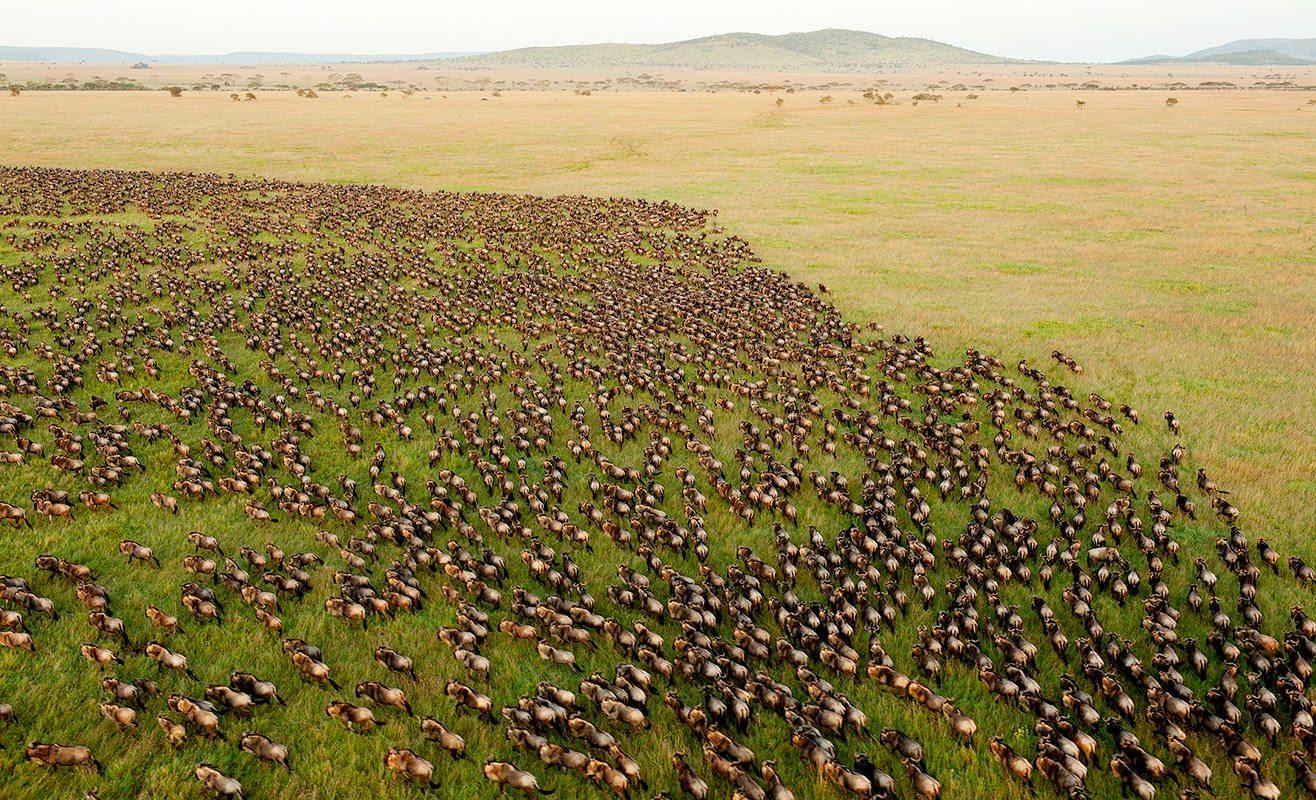
The Great Wildebeest Migration is often called the "Greatest Wildlife Show on Earth"—and for good reason. Every year, more than 2 million wildebeest, zebras, and gazelles move across the Serengeti-Mara ecosystem in search of fresh grazing and water, creating one of the world's most spectacular natural events.
But one of the most common questions travelers ask is:
"When is the best time to see the Great Migration?"
The answer depends on what experience you are looking for, because the migration is not a single event—it is a year-round journey.
The best time to witness the beginning of the Great Migration cycle is between January and March in the Ndutu Plains of the Ngorongoro Conservation Area and the Southern Serengeti.
During this period, the southern plains transform into lush green grazing grounds, attracting vast herds of wildebeest preparing to give birth. Between late January and mid-March, more than 500,000 wildebeest calves are born within a few weeks, creating one of the world's greatest wildlife spectacles.
The abundance of newborn calves also attracts predators such as lions, cheetahs, hyenas, and leopards, making this one of the most dramatic and rewarding times for wildlife viewing and photography.
Ndutu Plains (Ngorongoro Conservation Area)
Southern Serengeti
Kusini Area
✓ Newborn wildebeest
✓ Predator action
✓ Wildlife photography
✓ Spectacular green landscapes

As the rains come to an end, the Great Migration begins its journey north from the southern plains into the central and western Serengeti. During this period, the herds move slowly, grazing on fresh grass while preparing for the next stage of their epic journey.
This is also the rutting (mating) season, when male wildebeest engage in fierce battles to compete for mates. By early June, massive concentrations of wildebeest gather near the Grumeti River, preparing for their first major river crossing.
The migration during this season is characterized by endless columns of animals stretching across the plains, dramatic wildlife interactions, and fewer crowds compared to peak season.
Central Serengeti (Seronera)
Moru Kopjes
Western Corridor
Grumeti Area
✓ Massive migrating herds
✓ Wildebeest mating season
✓ Scenic landscapes
✓ Fewer crowds and excellent photography opportunities

From July to November, the Great Migration enters its most iconic and dramatic phase as the herds move north through the Serengeti toward Kenya's Maasai Mara. During this period, millions of wildebeest, zebras, and gazelles undertake perilous river crossings, creating some of the world's most spectacular wildlife encounters.
By end of July, the first herds begin arriving in the northern Serengeti. Between August and October, thousands of animals attempt to cross the crocodile-infested Mara River, where scenes of survival, determination, and predator-prey interactions unfold daily. As the short rains arrive in November, the herds begin their journey southward, eventually returning to the fertile plains of Ndutu and the Southern Serengeti to begin the cycle anew.
This period is widely regarded as the ultimate Great Migration experience and offers some of the finest safari opportunities in Africa.
Northern Serengeti
Mara River Crossing Points
Kogatende
Lamai Wedge
Maasai Mara (Kenya)
✓ Mara River crossings
✓ Dramatic wildlife encounters
✓ Predator action
✓ Classic safari experiences
✓ Wildlife photography

As the short rains begin to fall across the Serengeti ecosystem, the Great Migration starts its journey back south from the northern Serengeti and Kenya's Maasai Mara to the fertile short-grass plains of the Southern Serengeti and the Ngorongoro Conservation Area.
This stage of the migration is characterized by long-distance movements as the herds follow the fresh rains and rejuvenated grazing areas. By December, vast numbers of wildebeest, zebras, and gazelles spread across the southern plains, completing one of the world's greatest wildlife journeys and preparing for the next cycle of the migration.
With lush green landscapes, abundant wildlife, and fewer visitors, this period offers a spectacular and often overlooked migration experience.
Ndutu Plains (Ngorongoro Conservation Area)
Southern Serengeti
Kusini Area
Naabi Hill Area
✓ Returning migration herds
✓ Spectacular green landscapes
✓ Wildlife photography
✓ Birdwatching
✓ Fewer crowds

The Great Wildebeest Migration is not a single event—it is a year-round journey of survival, renewal, and wonder. Whether you choose to witness the spectacular calving season in the Ndutu Plains, the dramatic river crossings in northern Serengeti, or the breathtaking return of the herds to the southern plains, each phase offers a unique and unforgettable experience.
The only question is:
Which phase of the Great Wildebeest Migration would you most like to experience: the calving season, the great trek north, or the famous river crossings?

Looking for a truly unforgettable way to experience the Great Wildebeest Migration?
Ride alongside migrating wildebeest and zebras across the endless plains of the Serengeti and Ngorongoro on a horseback safari—one of the most immersive ways to experience nature's greatest spectacle.
Ready for your next adventure? Visit https://www.tanzaniahorsesafaris.com/ and book your Great Migration horseback safari today.
Photo credit: Tanzania Horse Safaris.

More stories and guides from SafariPedia.
September 15, 2026
August 30, 2026
August 27, 2026
August 16, 2026
Connect travelers with verified local safari experts and real experiences—making safari planning transparent, inspiring, and rooted in authentic African knowledge.
We bridge travelers with operators and guides who understand the land, wildlife, and culture firsthand, highlighting real stories from the field and centering local voices at the heart of every journey.
Resources
Get travel inspiration, safari tips, exclusive offers, and destination stories delivered to your inbox.
Tanzania Safaris • Serengeti • Ngorongoro Crater • Zanzibar • Kilimanjaro • Safari Tours • Lodges & Hotels • Tour Guides • Travel Stories