
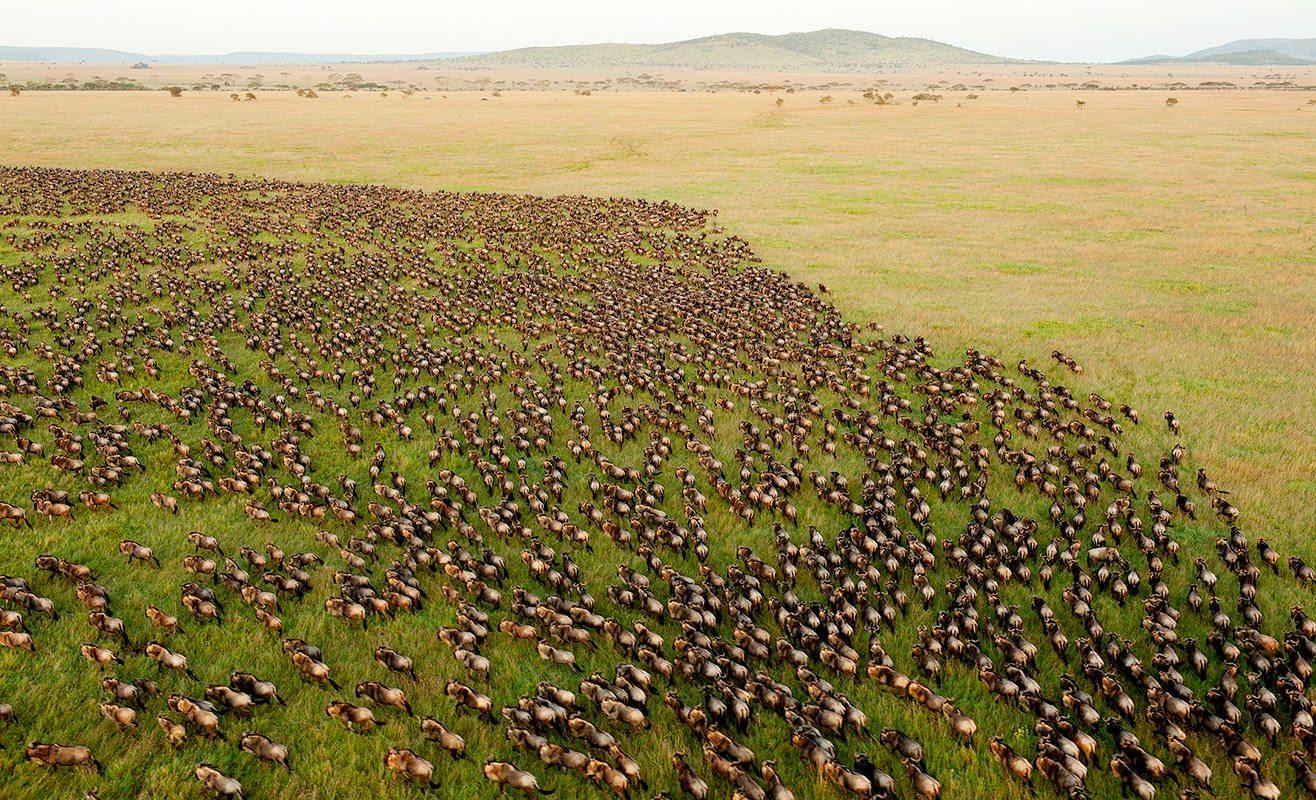
Every year, more than two million wildebeest, zebras, and gazelles embark on one of the most extraordinary wildlife spectacles on Earth—the Great Migration. This epic journey, often referred to as the "Greatest Show on Earth," unfolds across the vast ecosystems of Tanzania's Serengeti National Park and the Ngorongoro Conservation Area, driven by an ancient instinct to follow the rains and fresh grazing lands.
Between December and March, the southern Serengeti and the Ndutu plains of Ngorongoro transform into a nursery of life. Over a period of just a few weeks, more than 400,000 wildebeest calves are born, creating one of nature's most remarkable events.
The endless green plains become a stage where new life begins, but survival comes quickly into focus. Within minutes of birth, calves stand and walk, while predators such as lions, cheetahs, hyenas, and leopards watch closely, creating dramatic wildlife encounters unlike anywhere else in the world.
This season, known as the calving season, offers visitors the unique opportunity to witness what many call the true "Birth of Wonders."
As the rains fade and the dry season approaches, the herds begin their long journey northward through the Serengeti ecosystem. Thousands of animals move together in search of fresh pastures, crossing rivers, plains, and predator territories.
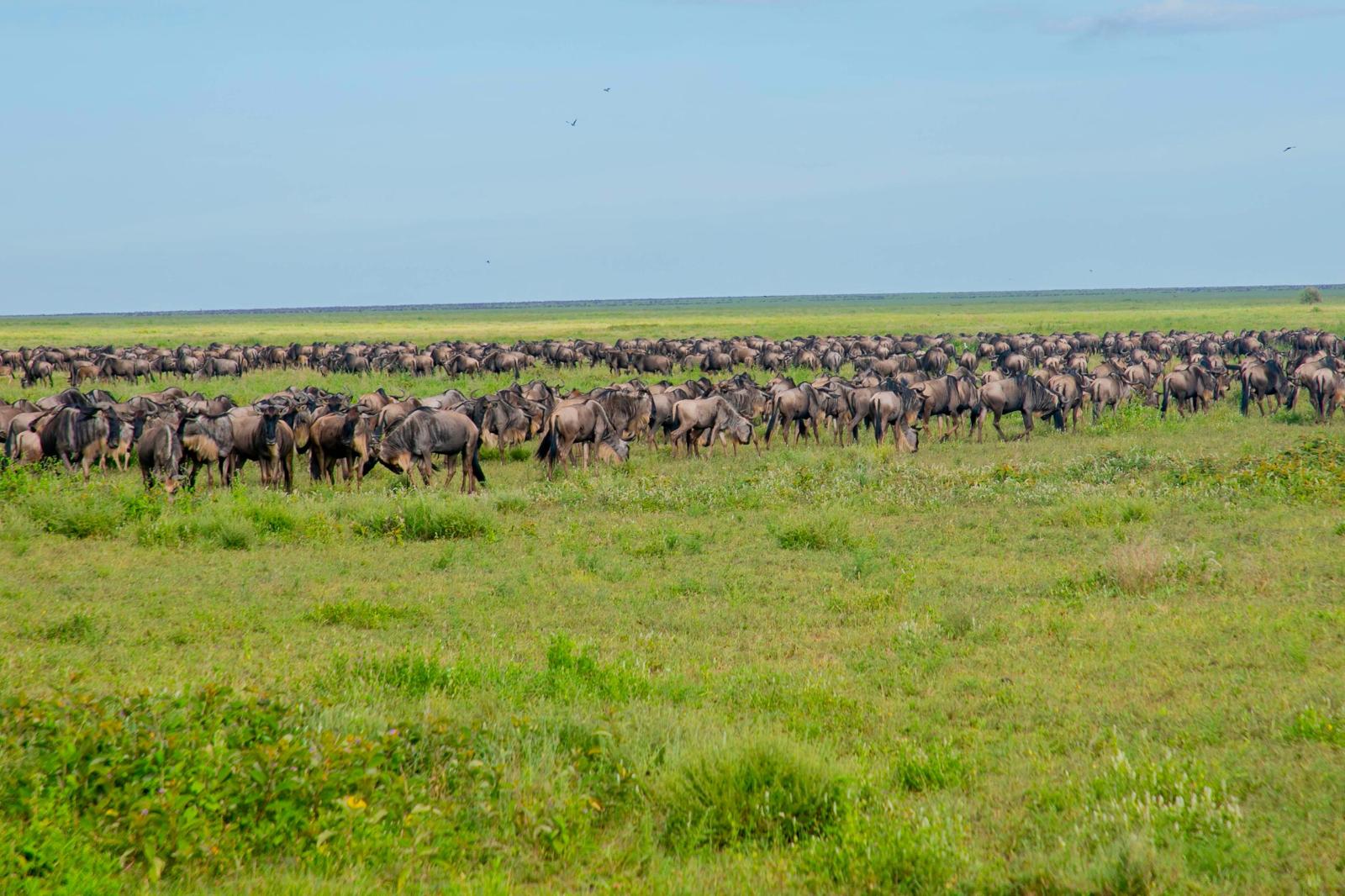
The migration is not a single event but a continuous cycle of movement, survival, and renewal. Massive columns of wildebeest stretch across the horizon, creating unforgettable scenes that have captivated travelers, photographers, and scientists for generations.
The Great Migration is more than a safari experience—it is a powerful reminder of the interconnectedness of nature. It supports predators, scavengers, ecosystems, and local communities, demonstrating the delicate balance that sustains one of Africa's last great wilderness landscapes.
For many visitors, witnessing the migration becomes more than a journey of observation; it becomes an emotional connection to the rhythms of the natural world.
December–March: Calving season in Ndutu and Southern Serengeti.
April–June: Herds move through central Serengeti.
July–October: River crossing season in northern Serengeti.
November: Herds begin returning south with the short rains.
Whether you witness the first steps of a newborn calf in Ndutu, the endless herds crossing the Serengeti plains, or the dramatic interactions between predator and prey, the Great Migration is an experience that stays with you forever.
Because in Tanzania, you don't just watch the Great Migration.
You experience one of nature's greatest stories ever told.

More stories and guides from SafariPedia.
September 15, 2026
August 30, 2026
August 27, 2026
August 16, 2026
Connect travelers with verified local safari experts and real experiences—making safari planning transparent, inspiring, and rooted in authentic African knowledge.
We bridge travelers with operators and guides who understand the land, wildlife, and culture firsthand, highlighting real stories from the field and centering local voices at the heart of every journey.
Resources
Get travel inspiration, safari tips, exclusive offers, and destination stories delivered to your inbox.
Tanzania Safaris • Serengeti • Ngorongoro Crater • Zanzibar • Kilimanjaro • Safari Tours • Lodges & Hotels • Tour Guides • Travel Stories